

Changing Ourselves to Change the World
Cultivating brave and safe spaces for transformation and healing for individuals and groups, online, in-person, and outside.
Connect with Me
Transformation Takes Practice
Whether you’re here because you’re ready for transformation in your life or your team’s, I’m just glad you found your way here.
Maybe you’re here because you’re…
- Looking for practical tools and relational support for this chapter in your story
- Shifting in your faith and need authentic connection and healing
- Hoping to connect with a community for healing through water, nature, social justice, and creative spiritual formation
- Untangling from oppressive faith systems and you need kindred spirits to help you move forward
- Looking to bring health, courage, and clarity to your organization and team through retreats, workshops, and experiences
- Dreaming of starting or strengthening new expressions of community in our evolving culture
You’re in the right place
You’re passionate about healthier systems, justice and equity, and changing ourselves to change the world. I look forward to connecting with you so that we can create change together.
Guiding Values

Practice
Moving theological ideas and knowledge into tangible, embodied practices.

Authenticity
Honest, raw, and vulnerable conversations and connections.
Community
People and places to practice together.

Creativity
Utilizing a wide range of tools and experiences that reflect specific needs.
Services
Cultivate
Your
Community
Bring your community together. Walk away with practices and inspiration that will empower you and your group to create change and transformation. With creative and interactive facilitation, every workshop, event, or team retreat is tailored specifically to your organization’s needs.
Speaker | Catalyzer
Workshops
Retreats
Event Speaker
Team Development | Organizational Coaching
Team and staff retreats, workshops, and experiences
Helping communities navigate change
Reimagining church and empowering dreams

“Kathy has worked with our non-profit staff team for over 6 years, facilitating staff retreats and helping our team become healthier together. We’ve seen the fruit of these efforts—greater personal awareness, increased vulnerability and courage, strengthened team dynamics, and deeper roots to live out our core values and expand our work together.”Steve Thompson | Executive Director, Justice and Mercy Legal Aid Center
Tools for
Transformation
Catalyze transformation and healing by engaging with the tools, stories, and practices reflected in each book – change yourself (and your groups) to change the world.
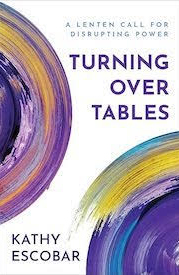
Turning Over Tables: A Lenten Call for Disrupting Power
Releasing January 14, 2025, this book is for individuals and groups that want to be challenged to engage with issues of power in an accessible way that moves us to action. With 6 weeks of daily practical and honest reflections about power along with individual and group reflection questions, journaling prompts, and embodied practices, Turning Over Tables is framed over the Lent season but is possible to engage with any time of year.
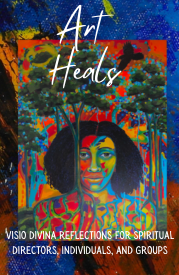
Art Heals: Visio Divina Reflections for Spiritual Director, Groups, and Individuals
This collaborative project includes the transformative contemplative artwork of Jennifer Hamlett Herrick, who died in 2022 and left behind an incredible collection of soulful art. Jenny was part of The Refuge community and this book includes some of her pieces that include powerful imagery to engage with. With quotes, reflection questions, and images to come back to over and over again, this beautiful collection is an excellent tool for spiritual directors and group reflection as well as individuals.
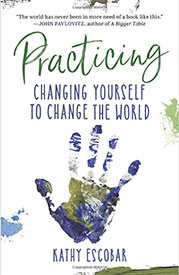
Practicing: Changing Yourself to Change the World
From the masses of young people spurning organized religion to faithful followers of Jesus, there is a deep hunger across gender, age, socioeconomics, and denominational backgrounds for practical, tangible ways to live a life of love, mercy, and justice in our divided, fragmented world.
Centered on the practices of healing, listening, loving, equalizing, including, advocating, mourning, failing, resting, and celebration, Practicing is for individuals and groups on a path to discover that we have more power to change the world than we realize—and it starts with changing ourselves.
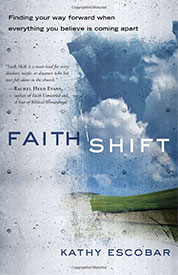
Faith Shift: Finding Your Way Forward when Everything you Believe is Coming Apart
Filled with honest stories and practical insights, Faith Shift gives language to what many experience as their faith evolves. With a blend of vulnerability and hope, it addresses the painful losses that come with spiritual shifts and offers tangible practices for reimagining life and faith after it unravels.
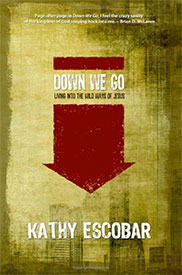
Down We Go: Living into the Wild Ways of Jesus
Down We Go is a practitioner’s guide for creating and cultivating incarnational community. Based on the idea of living into the Beatitudes and 12 steps of recovery, it explores what it means to follow Jesus into the hard places of suffering, inequality, and injustice to cultivate hope, beauty, justice, equality, generosity, and healing.

A Weary World: Reflections for a Blue Christmas
During the holidays, many of us suffer for all kinds of reasons. The magnitude of our weary world weighs on our hearts and minds. We wrestle with chronic pain, broken relationships, shattered dreams, fragile faith, and unexpected losses. While for some it’s the “most wonderful time of the year”, for many it’s a season of dread.
This accessible book includes 4 weeks of raw and honest reflections centered on honoring reality, practicing honesty, embracing paradox, and borrowing hope for individuals and groups experiencing a Blue Christmas. It includes discussion questions, practices, and creative contemplative ideas for communities.
Whether you are reading the material alone or with a group, workshops, team retreats, special events and online classes are available to illuminate learning, build community, and move ideas into practices.

"I can’t count the times people have come to me saying their faith is falling apart and they have nobody safe to go to for help. I wish I could send them all to spend a few days with Kathy Escobar, a wise pastoral presence who understands, accepts, and works with people wherever they are. Short of that, now I can send them to Kathy’s powerful, practical, honest, sensitive, and intelligent book. It’s just what so many of us have needed and couldn’t find."
Brian D. McLaren
Author, Speaker, and Activist

"Tender, weary, disoriented ones take heart: here is your pastor. Kathy is a faithful companion to those who wander, stumble, and against all odds, continue to hope."
Sarah Bessey
Author, Speaker, Co-Founder of Evolving Faith

"I don’t go to Kathy for the latest social justice hot take. I go to her to learn how to translate meaningful ideas into meaningful action—to move from speaking truth to living out the truth in sustainable ways among the complicated realities of human lives intersecting one another. She never promises quick fixes but advocates for the slow labor of practicing in the direction of justice."
Cindy Wang Brandt
Author and Podcaster
A Kindred Companion
for Your Journey
Find your way forward. Connect one-on-one or in a group of kindred spirits to share your messy and beautiful stories, gather tools to get unstuck, and reimagine life and faith in unique ways.
Spiritual Coach
Individual and Group Experiences: Virtual, In-Person, and Outside
Faith Sh*t Midwife Sessions: Six One-on-One Virtual Sessions
De-Churchifying: Online Gatherings and Special Events
Mere Mortals: Life and Death Considerations Workshop
“I highly recommend Kathy’s faith sh*t midwife sessions! In the midst of a scary, lonely, disorienting faith shift, I found in Kathy a wise, empathetic and experienced companion. There is no question or emotion too big or too small to safely share, and it is all met with the kindness of someone who knows what it feels like to lose everything that was once so grounding. Kathy listens deeply, asks good questions, and offers helpful prompts and practices to help fuel my soul’s exploration. After years of religious trauma, Kathy’s open-handed, generous approach to our work together is healing, restorative and empowering.”Tara C.
Online Classes +
Film Series + Podcasts
Engage with tools for transformation at your own pace with my online classes, film series, and podcast episodes!
Soul + Practice Podcast
Raw conversations and real practices with Kathy Escobar and Phyllis Mathis.
Be a Refuge Podcast
Hosted by Kathy Escobar and Jo Douglas, stories from the Refuge community as we learn, dream, and practice together.
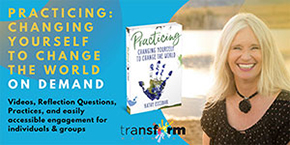
Practicing: Changing Yourself to Change the World
On-demand videos, reflections, practices, and engagement for individuals and groups
A Weary World: Reflections for a Blue Christmas
A four-film series with a discussion guide on honoring reality, practicing honesty, embracing paradox, and borrowing hope.

Turning Over Tables
Coming January 2025 – A Lenten Call to Disrupting Power with weekly chapter video reflections.
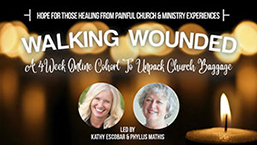
Walking Wounded: Hope & Healing for those who have Been Hurt by Church & Ministry
A four-week online cohort to unpack church baggage.

“We identify ourselves as “a community of faith practicing the way of Jesus together”, and at times we have really struggled to live that out in practical ways. We used Kathy’s material, Practicing, to guide our summer Sunday gatherings, and it really helped to ground us in tangible practices that are accessible to everyone and help us love better and live more justly. It led to some much-needed conversations, fostered community, and helped us reflect deeply on how doing our own inner work is where we have to begin.”Susan Rogers | Pastor, The Well at Springfield

Collaborating With
Community Cultivator | Change Catalyzer
Author, Speaker and Coach
Hey There!
I’m Kathy Escobar! I’m a community cultivator and a change catalyzer. I believe in the power of human connection and that healthier people make healthier families, communities, and systems. I help create safe and brave spaces for transformation and healing for individuals and teams in real life, online, and outside.
I’m passionate about creating inclusive spaces centered around people who are marginalized. I believe in equity, justice, relationships, transforming communities, healing in nature, recovery, and tangible practices.
More About Kathy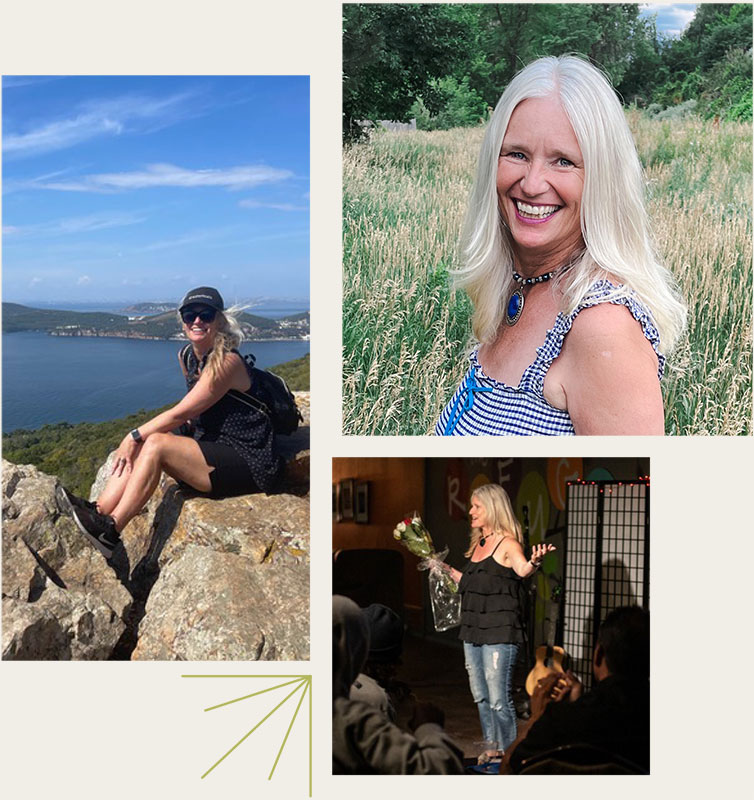
Leading with Love
Co-Executive Director and Founder of #CommunityHeals
The vision for #communityheals is simple–we want to make spaces for transformation accessible for all.
Through water sports, the beauty of the mountains, and simple friendship, #communityheals is dedicated to breaking down barriers–financial, emotional, physical, and practical ones–so that people can experience healing, hope, and connection with others in transforming ways.
Co-Founder and Co-Pastor of The Refuge
The Refuge is a hub for healing community, social action, and creative collaboration serving in North Denver since 2006. Inspired by the ways of Jesus, The Refuge’s work is centered around shared values of presence, engagement, transformation, welcome, creativity, and celebration.
Contact Kathy
Let’s Connect!
Fill out the contact form, and I will connect with you to learn more about your journey and how I can come alongside you.